
The Lily and the Eagle: The Assimilation of Albanians in Plav, Guci and Sanxhak
Updated: Apr 9
Author: Valton Vuçitërna

An Introduction to the Dilemma
The Balkans are often imagined as a region of explicitly demarcated ethnic and religious divisions, forged through centuries of imperial subjugation, regional rivalry and other such conflicts. Yet nowhere is the complexity behind this more apparent than in the peninsula’s untamed frontiers, where identities have been contested and reshaped by coercion and force.
Plav, Guci and the wider Sanxhak region of eastern Montenegro and southwestern Serbia occupy just such a liminal space. Historically inhabited by Albanians, these territories have become sites of sustained political and cultural pressure following their incorporation into neighboring Slav-dominated states. The mechanisms of control employed on the Albanians of these areas follow a cultural pattern: religious realignment, linguistic suppression and demographic engineering. Within a generation, an entire Albanian community had their identities eroded and redefined by neighboring state structures, as well as by local religious and ethnic prejudices. This development was by no means a random occurrence, but rather traces back to a systemic pattern historically deployed by regional despots over centuries against the Albanian inhabitants of the land.
The Historiographical and Toponymic Record
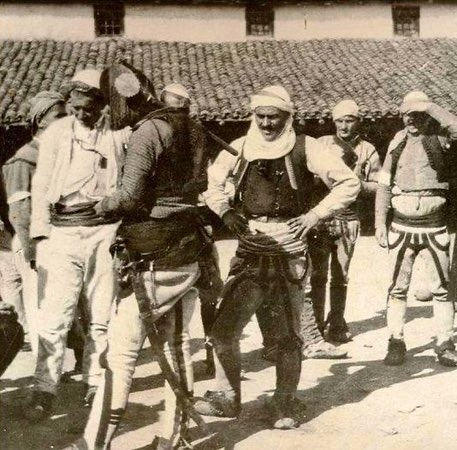
Despite objections raised in sections of modern South Slavic scholarship, Albanians have played a crucial role in shaping the topographical nomenclature and ethnic makeup of the territories that constitute the modern state of Montenegro. Evidence of this presence persists in historical records, settlement patterns as well as Albanian-derived toponyms that are not limited to the borderlands between modern Albania and Montenegro, but throughout the region. This demonstrates a long-standing Albanian presence that predates the political boundaries drawn up in the late 19th and early 20th centuries.
Present-day Montenegro was once inhabited by the paleo-Balkan Labeatae tribe centuries before the arrival of Slavic peoples into the territory. According to the Arbanas Croatian archaeologist Aleksandar Stipčević in his book The Illyrians: History and Culture, the Labeatae were centered around Lake Shkodra, once known to the Romans as Lacus Labeatis — taking after the tribe. Notably, their ethnonym contains the Lab- element, an onomastic particle that is a metathesis, or change of positions, of the root Alb-. This root is commonly traced to the Proto-Indo-European word albʰós, meaning “white”, from which the Latin word albus and the name of the Alps would be derived. Interestingly enough, this same particle exists in reference to the Albanians in Medieval sources, the land of Albania as well as Albanian-inhabited regions.
Chroniclers and rulers frequently employed the roots Alb- or Arb- when referring to Albanian populations, as evidenced by toponyms like Albanopolis in antiquity, the medieval polity of Arbanon – from whence the name of this magazine draws inspiration – and the term Arbanaš – an exonym used by Serb rulers to denote Albanian-speaking Catholics. This common root is thought to have been employed by medieval Albanians themselves as an endonym, evidenced by the preservation of the term Arbëror — meaning “Albanian” — by the Albanian-speaking Arbëreshë community in Italy and the Arvanite community in Greece.
In continuation of this Paleo-Balkan onomastic pattern, many other locations in the Albanian-speaking territories preserve toponyms related to Lab-. This root can be interpreted as reflecting the mountainous geography and snow-capped peaks that saw the ethnogenesis of the Albanians. Such places include the hilly regions of Llap (a Slavic adaptation of Lab transferred back into Albanian) in northeastern Kosova and Llapusha in central Kosova; villages such as Llapushnik in Drenica, Llapçeva in the region of Llapusha, and Llapashtica in the region of Llap; as well as the Labëria region of southern Albania, inhabited by the Lab Albanian sub-ethnic group well-known for their well-preserved musical tradition. As demonstrated, variants of this root are closely associated with areas historically inhabited by Albanians, which is among the indicators of etymological continuity with paleo-Balkan populations around which there is considerable scholarly support.
Fascinatingly, Montenegro is home to several such examples of Albanian-adjacent toponyms. One of the more famous examples is the coastal city of Ulqin, known in Southern Slavic languages as Ulcinj. In antiquity, it was referred to in Greek as Oulkinion — or some variation of that name — theorized by historians like Livy and Pliny the Elder to have been settled by colonists from the Kingdom of Colchis. Many have inferred, perhaps more directly, that Oulkinion is related to the Albanian word ujk (or ulk), meaning “wolf” in English and descended from the Proto-Indo-European term for the animal, wĺ̥kʷos. Even so, this etymological explanation is contested by scholars.
Other examples are more modern in their documentation and relation to the Albanian language. The town of Kolašin, northwest of Plav and Guci, has been described as a Slavic adaptation of Kolë i Shen or Shen Kolë, referring to St. Nicholas in the Albanian language — widely revered by Malësor Albanians of the Great Highlands. This is distinct from the South Slavic term for saint, the masculine version of which is Sveti. This interpretation is noted in the book Black Lamb and Grey Falcon published by British journalist Rebecca West in 1941 on her travels through then-Yugoslavia, where she also documents the eradication of Kolašin’s Albanian population by local Montenegrins in 1858.
Similarly, the historical region of Lješanska Nahija in Old Montenegro, along with the surname Lješnjanin borne by the Slavic family which migrated to Plav from this region, has been linked to the Albanian name and word Lesh, meaning “wool.” In the Middle Ages, Lješanska Nahija was also known as the home of the Goljemadi, a Slavicized Albanian tribe that was known in Albanian as Gojëmadhi, meaning “large mouth.”
Famously, the river Lim that passes through Montenegro, Serbia and Bosnia — as well as partially in Albania, known there as the Vermosh River — is likely etymologically derived from the Albanian word lumë, meaning “river” or “stream.” According to Alexander Loma, a Serbian philologist, the Albanian word was adapted into South Slavic around the 10th to 12th centuries AD to describe the river in its entirety, and remained in use. In South Slavic languages, the typical word for “river” is reka. These etymological patterns, among several others, attest to the widespread historical presence of Albanian populations in Montenegro which preceded their later assimilation.

Pre-Modern Foundations of Albanian Assimilation
It is important to make clear that the assimilation event of the 20th century was not the result of an isolated or random decision by a single Southern Slavic state. Instead, the process reflected part of the dynamic of the Slav-Albanian relationship in the region since the Middle Ages: assimilation functioned as an instrument of rule by Slav authorities seeking to weaken the Albanian cultural, political and demographic position in hinterland territories for centuries.
Much of what is today Montenegro was historically inhabited by various tribes of pastoralist semi-nomads organized into katuns, an Albanian term for “pastoral community” — later taking on the meaning of “village” in the Gheg Albanian dialect as opposed to the standard Albanian fshat. These communities were typically of Albanian stock, although some tribes are thought to be of Vlach origin: a Latinized paleo-Balkanic population that is today associated with the various Aromanian groups in southern Albania, Macedonia and northern Greece.
The extent of the Albanian tribes is thought to have reached into what is today Herzegovina in neighboring Bosnia as well as the Dalmatian coast in Croatia, evidenced by the Burmazi and the Mataruga tribes. The former, first mentioned in 1330, inhabited a village between Stolac and Trebinje in today’s Bosnia. Their name is inferred to come from a compound of the Albanian words burr and (i) madh, meaning “great man,” potentially demonstrating the tribe’s non-Slavic origin despite its distance from the Albanian tribal nucleus. The Mataruga are first mentioned in 1222 and in a defter from 1477 as living in ten villages near Prijepolje in western Serbia – located in today’s ethnographic region of Sanxhak — headed by the chieftain Vojko Arbanaš, showing clear Albanian anthroponymy. As stated by Idriz Ajeti in his work Albanian Language Studies: “it is a well-known phenomenon that Albanians from the surroundings of Plav and Guci, and from areas further north, would travel with their herds to winter as far away as Bosnia.”
By the second millennium AD, the region was known to the Slavs by the name Duklja, a derivation of the Latin name Dioclea, originally stemming from the Illyrian city and tribe of the Docleatae near today’s Podgorica. Following the Great Schism in 1054, Duklja — which would later become known as the Kingdom of Zeta — fell under the administration of Constantinople, and the Eastern Orthodox Church. As Thoma Murzaku describes in his 2005 publication History of the Balkans: From Late Antiquity to the 17th Century, the Slav dynasties of Zeta would begin to expand towards the Adriatic, especially after the conquest of the kingdom by Stefan Nemanja of Serbia in 1198, supported by the Serbian Orthodox Church, which was granted autocephaly from the Ohrid Archbishopric in 1219.
The Serbian Church would attempt to cement itself onto the inhabitants of Zeta through political and religious measures, despite the region’s predominantly Catholic Albanian makeup under the Archbishopric of Tivar. Much attention was given to Orthodox clergy in an attempt to push the Orthodox rite, while the holdings and wealth of their Catholic counterparts were largely confiscated, along with the prohibition of ordaining young Catholics into religious leadership. Much to the dismay of the Papacy, which saw Tivar as a focal point for the survival of Catholicism in Slavic Orthodox-ruled lands, the Western Rite would slowly lose its grip in the region amidst the Serbian Church’s dominance.
This subjugation of Catholics in the early Serbian states and later Serbian Empire would culminate under the rule of Tsar Stefan Dušan and his code, The Law of the Pious Emperor Stefan, better known as Dušan’s Code. First promoted in Shkup in 1349, the code contained pitiless rulings against “Latin heresy”, and saw Albanians as half-believers who were to be kept separate from Serbian society. Catholicism in medieval Serbia existed largely among her Albanian population, and was associated with the Arbëror — an idea supported by the Albanian Catholic priest Pjëter Bogdani in his 1685 treatise dubbed Cuneus Prophetarum, where he notes that the Slavs called the Western Rite of Rome arbanaška vera, meaning “the faith of the Albanians.”
The Serb despots would invest heavily in the transformation of Catholic churches, as well as old Byzantine ones which served as places of worship for Albanians, into the Pravoslav Rite — the Orthodox faith of Serbia. Local place names would be altered into Slavic ones, and the names of Catholic Albanian inhabitants would also be changed into Orthodox Slavic ones. Guillame Adam, the French Archbishop of Tivar from 1324 to 1341, noted that “Albanians believed that they consecrated their hands with the blood of those Slavs,” in reference to the Serbs who had begun to occupy their churches and property, stunting the growth of the Catholic faith throughout the lands inhabited by the Albanian people — and inadvertently laying the foundations for gradual conversion to Islam amongst the Albanians in the Ottoman era.
First Era of Assimilation into Slavic Identity through Orthodoxy
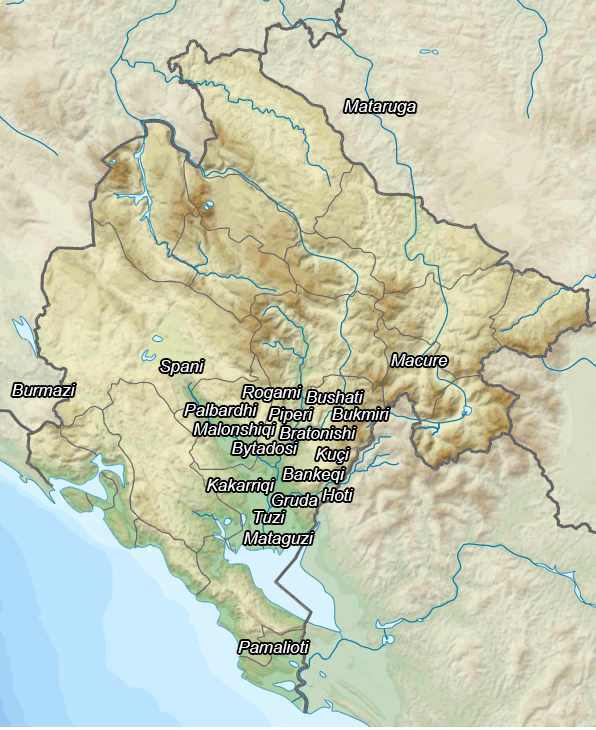
The hostile attitude towards Albanian Catholics and institutions of that faith would begin a gradual and sweeping assimilatory effect, in which Albanian tribes in Montenegro would be pressured to accept the Eastern Rite of Christianity, bearing similarities to the process that took place amongst many Albanian Catholics in Kosova. This would lead to gradual Slavicization among several Albanian tribes in faith, language and culture — most notably the Palabardhi, Kuçi, Vasaj, Mërkoti, and Bratonishi.
The Palabardhi, now known by their Montenegrin name Bjelopavlići (a direct Slavic translation of the original Albanian name), inhabited the Danilovgrad Plain in central Montenegro and were known as Dukađinci — from Dukagjini — by the local Slavic-speaking Lužani, corresponding to an oral tradition tracing their heritage to Pal Bardhi, a purported son of the medieval Albanian lord Lekë Dukagjini. The Bratonishi would take on the name Bratonožići, but it is important to note that many of the tribe’s surviving brotherhoods, denoting more directly connected lineages within tribal structures, recognize St. Nicholas as their patron saint — an aforementioned figure widely revered by Catholic Albanians of Malësia. One such brotherhood is the Baljević, whose name carries the Albanian word balë — denoting an animal with a white spot on their forehead. The Vasaj, now known as Vasojevići, would grow heavily Slavicized, but continue to don Albanian dress well into the 20th century, such as the female-worn Albanian xhubleta. The noted German Albanologist Johann Georg von Hahn recorded an oral retelling in 1850 on the Vasojevići, which tied the tribe, who are said to be descended from a certain Vas Keqi — to the customary ancestors of several other Albanian tribes, such as Lazër Keqi of the Hoti and Ban Keqi of the Trieshi.
Infamously, major figures in Serbian history such as Slobodan Milošević and Karađorđe Petrović could trace their origins back to this tribe. This indicates that the Albanian Vasaj first experienced broad Slavification prior to more limited specific cultural Serbification in the cases of the family lines that led to Milošević and Petrović, despite the Vasojevići considering themselves separate from Serbs, referring to them as Srbljaci even after assimilating into a Slavic identity.
The Kuçi are thought to be related to the Albanian Berisha tribe, usually with the name Berisha e Kuqe (Red Berisha), as detailed by 19th century Kuçi chieftain Marko Miljanov. Evidenced by their Albanian anthroponymy in the Middle Ages through the Chrysobulls of Deçan and Ottoman defters, the Kuçi were an Albanian tribe, and would split into offshoots in the form of the Koja and Trieshi, both tribes persisting as Albanian Catholic to this day. Despite this retention among the two tribal subdivisions, the Kuçi would convert to Orthodoxy. In the case of the Kuçi tribesmen who settled in Plav and Guci, they would become Muslims after Ottoman contact.
Of the Bratonožići, Bjelopavlići and Kuçi, a Franciscan report from the 17th century notes that “since almost all of them use the Serbian rite and the [South Slavic] language, soon they should be called Slavs, rather than Albanians.” However, Miljanov, writing in the late 19th century, would state that he was fluent in the Albanian language because of its use in his family home, as well as the fact that his mother, Borika, was an Albanian Catholic. He would additionally go on to author The Life and Customs of the Albanians, in which he detailed the culture of neighboring Malësor tribesmen, depicting his immense interest in the Albanians.
The Mërkoti, now known as the Muslim and Slavic-speaking Mrkojevići, come from the region between Tivar and Ulqin, and are made up of families descended from historic Albanian communities from nearby Sheshtani and Kraja, as well as Orthodox Slavic migrants from central Montenegro. Through intermarriage with Slavs, the Mërkoti developed bilingualism that is nowadays displayed in both Albanian and the Shtokavian dialect of Montenegro. As noted in Maria Morozova and Alexander Rusakov’s study, Slavic-Albanian interaction in Velja Gorana, the Slavic-speaking inhabitants of the region, though monolingual, have retained Albanian characteristics in their speech. One such example is the use of the ge preposition, a calque that corresponds to the te preposition (generally meaning “to”) in Albanian.
Take for example the phrase: “you have come to the girl.” The monolingual Slavs of the Mërkoti region would say “došla si ge đevojka”, in comparison to the Albanian “ke ardhur te vajza.” In the standard dialect of Montenegro, it would instead be “došao si kod djevojke.” The difference between these forms is revealing. Standard Montenegrin kod governs the genitive case, forcing a morphological change in the noun (djevojka to djevojke). Although te does govern case in Albanian, the borrowing was incomplete; Slavic speakers took the preposition but not the Slavic case-governing mechanism attached to it, as Albanian and Slavic case systems are sufficiently different that the alternation could not be transferred naturally. The dialect of the Slavs in the Mërkoti region thus left the noun in its base form: đevojka.
This phenomenon of Albanian grammar incorporated into Slavic dialects can be observed throughout the region amongst the Kuçi and Bratonožići, as well as the Slavic-speakers of Plav and Guci. Thus, the foundations of the assimilation of Plav and Guci are evident in the historical record, which is itself rooted in the absorption of Albanians in Montenegro to a Slavic identity pressured through the Orthodox faith and intense contact between Slavic-speaking Montenegrins and northern Albanian tribesmen.

The Early Ottoman Era and Islamification of Albanians
The period of initial Ottoman conquest and subsequent administration in the region would introduce a new factor into the process of Slavification among the Albanians in Montenegro: the Islamic faith. Much of the epoch of Ottoman domination in Montenegro and northern Albania was marked by tribal resistance against Turkish rule, such as the Convention of Kuçi in 1614, which successfully united 44 leaders in an insurrection against the Empire. Later in the 17th century, Plav and Guci would emerge as trade centers in the Highlands, given their advantageous position between Montenegro, Kosova and northern Albania. Thus, they were also the target of banditry by local Albanian tribesmen, mainly the Kelmendi, who disrupted Ottoman trade and reaped the rewards of the riches brought through the two towns.
The success of trade in the Plav-Guci region, which also translated over to the markets of Sanxhak and especially Pazari i Ri, to be covered in detail below, made the urban environment enticing for Albanian families seeking to participate in the valley’s growing economy. As the overwhelming majority of Gheg Albanians remained Catholic at this time, they were largely barred from commerce and, under Ottoman dhimmi laws, subject to the jizya — a special tax for non-Muslims — in cash, making it one of the hardest levies to meet. This ability to participate in extensive trade networks and face a lower tax burden provided a strong pragmatic incentive for conversion to Islam. Another crucial factor was the Catholic Church’s inability to operate extensively in Ottoman Albania, not to mention the lack of priests who spoke the language.
Many Albanians elsewhere in Montenegro and Northern Albania, however, remained Catholic, largely due to the mountainous isolation of their regions to both major trade routes and Ottoman forces. Such examples exist in the villages around Tuzi, where many Hoti and Gruda tribesmen of the region retained their Christian faith. It must be noted, however, that by no means was Roman Catholicism being practiced in ways that would be altogether familiar to believers elsewhere, as the shortage of clergy in the region made it difficult to educate the Albanian laymen about their religion in any detail, and local traditional practices retained a strong presence.
In 1675, the famous Ottoman explorer and author Evliya Çelebi would accurately describe Guci as a “lively Albanian town.” The region of Plav and Guci became attractive to many families from other regions, such as several brotherhoods of the Gruemiri tribe. Two Gruemiri families were the Shabanagaj who settled in Guci, and the Rexhepagaj who settled in Plav, both of which would play crucial roles in the Albanian cause in the centuries to come.
Sanxhak would similarly serve as an economic nucleus, noted by the fact that the region’s best-known city is present-day Novi Pazar, Serbia — or Pazari i Ri in Albanian — meaning “new market.” Pazari i Ri would also see Albanian families of various tribal origins begin to urbanize and convert to the Islamic faith. The surrounding villages were almost certainly inhabited by such Albanians, as evidenced by one Tahir Efendi Gjakova. an Albanian bejtexhi — a Sufi Muslim bard — from the Saraçi brotherhood of the Kastrati tribe, born in the village of Lukare, just south of the city. Gjakova would become famous for his work dubbed Emni Vehbije, written in the northwestern dialect of Gheg Albanian and would eventually become a religious professor in Gjakova in western Kosova, where he would receive the sobriquet associated with the city.
As Albanian villagers increasingly took notice of the material benefits of urbanized life, they would seize the opportunity to develop themselves economically through conversion to Islam, thus granting them new protections and rights under the Ottoman system. However, this would also set up the mechanism that would be later used to transform the Albanian identity in Plav and Guci into an anachronistic “Bosniak” one in the 20th century — a mechanism that would prominently ignore, among other factors, the crucial role that the Albanians of the region played in the national movement and formation of the modern Albanian nation-state.

Ottoman Decline and Albanian Resistance
Ottoman administration in the Balkans would slowly weaken over the 18th and 19th centuries, driven particularly by events like the Crimean War, when they would begin to take foreign loans to rebuild from the Empire’s losses. The marked period of decline between 1875 to 1878 would come to be known as the Great Eastern Crisis, in which several world powers would intervene in the Empire amidst the instability and uprisings begun by both its Muslim and Christian inhabitants — revolts provoked in part by increased local taxes to the Sultan aimed at paying down debts to foreign creditors.
These uprisings, as well as the direct conflict of the Crimean War, were used by the Russian Empire to further its interests in Ottoman territory. Russia established itself as the protector of Orthodox Christians in the Ottoman Empire. Much to the dismay of the Sublime Porte, the fledgling de facto Principality of Serbia would declare war against the Sultan in 1876. Russia, seeking a return to dominance in the Black Sea region, would align itself with both the emerging Serbian and Romanian states against the Ottomans. With the end of the Russo-Turkish War in 1878 came the official independence of the principalities of Serbia, Montenegro, Romania and Bulgaria. The war’s conclusion saw multiple major agreements signed, including the Treaties of San Stefano and Berlin, which ceded Albanian-inhabited territories to the newly recognized states, prominently appending Plav and Guci to Montenegro.
In order to counteract the partitioning of Albanian-speaking territories to the new Balkan States, 47 leading Ottoman Albanian landowning figures, northern and southern alike, founded the League of Prizren – officially the League for the Defense of the Rights of the Albanian Nation – on June 10, 1878. The delegates assembled in the city of Prizren in southern Kosova and petitioned a decree to the Ottoman court, thus cementing the effort toward self-determination and autonomy of Albanians in the Empire and the unification of the provinces they inhabited into a single vilayet. The Albanians of Plav and Guci petitioned the Great Powers to consider their pleas against the treaties, which would separate them from the rest of the Albanian-speaking lands, yet this would be met with rejection. Consequently, the Albanians of the region became a fundamental driving force in the League of Prizren.
Plav and Guci’s Albanians were well-accustomed to the ownership of guns, as noted by George Gawrych in The Crescent and the Eagle. This provided a ready environment for resistance mobilization even without a standing army. Refusing to recognize the legitimacy of the land transfer to Montenegro, they would deploy under the command of Ali Shabanagaj, known better as Ali Pashë Gucia — the kajmekam (governor) of Guci, fearing that they would see the same violent fate as the aforementioned Albanians of Kolašin, as well as those of the town of Nikšić and its surroundings. Ali Pasha assigned Jakup Ferri Shabaj — a Kuçi tribesman whose ancestors had migrated to Plav — the role of defending his hometown, as well as offering local Albanian tribesmen an alliance with the League.
The Albanian forces of just 2,100 irregulars would meet the Montenegrin forces commanded by none other than Marko Miljanov, who, having assimilated into a Slavic identity, led as chieftain of the Orthodox Kuçi and served the Montenegrin kingdom, at the Battle of Nokshiq on December 4, 1879. As the Montenegrins moved towards the narrow valley entrance to the village of Nokshiq, they were engaged by the Albanians, led by Ferri, Baca Kurti of the Gruda tribe, Ahmet Gjonbalaj of the Kelmendi, Çelë Shabani of Rugova and the famous Mic Sokoli of the Krasniqi. In the ensuing conflict, Ferri would fall alongside Omer Balushaj, the bajraktar of Plav. A famous Albanian song about Ferri would claim that he was found standing against a wall, struck by seven wounds and surrounded by the heads of 30 Montenegrin combatants he had himself collected. Though the battle ended with significant casualties on both sides, it offered a strategic tailwind to the Albanian position and strengthened the League of Prizren’s hold over Plav and Guci. Amidst the hardships of war, it led to a boost in morale after the purported impalement of some 220 Montenegrin heads by the Albanian irregulars, 60 of which were brought back to Guci itself.
The Montenegrin government, embarrassed about its failure to establish control over Plav and Guci, attempted to conceal the damages it suffered by publishing an overview of the battle greatly exaggerating Albanian losses. However, Prince Nikola I Petrović-Njegoš and the Montenegrins would have to face the League of Prizren’s tribal forces again at Arzhanica Bridge in Tuzi just some months later. The Ottomans agreed to withdraw from the area in a compromise on April 22, 1880 in order to calm geopolitical tensions, allowing Montenegrins to occupy the lands of the Hoti and Gruda tribes. The ensuing vacuum, however, was promptly filled by Albanian tribesmen under the leadership of Baca Kurti Gjokaj and Çun Mula, the bajraktar of the Hoti tribe. The situation was aided by the fact that the Ottomans left behind many of the resources needed to sustain battle, giving the 8,000-10,000 Albanian tribesmen an edge in countering the Montenegrin forces some 10,000 strong. After intense combat, the Montenegrins would be forced to retreat to Podgorica, and the territory of the Gruda and Hoti tribes remained under Albanian control — thus also securing Plav and Guci.
Though the League ultimately failed to achieve its initial goal of unifying the Albanian vilayets, their successful military resistance would allow the Ottomans — and thereby the Albanians — to retain Plav and Guci. This, however, came with a significant cost. The Great Powers, recognizing the dire situation in the borderlands of the Ottoman Balkans, urged the Sublime Porte to cede the coastal town of Ulqin to the Montenegrins. Though predictably met with intense armed opposition by Albanian forces around the city, the Ottomans would allow Montenegro to take control of the crucial port on November 23, 1880. The Albanians of Plav and Guci were spared brutal repression for the time being, but would decades later, under the context of the Balkan Wars, have to face the retribution of those who had once failed to seize the region.

The Horrors of the Balkan Wars
A lethargic shell of the Ottoman Empire trudged on in the period following the actions of the League of Prizren, ultimately succumbing to an internal revolution in 1908 led by the Young Turks movement, founders of the Committee of Union and Progress (CUP) which sought to restore the constitution that was in effect from 1876 to 1878. Though it enjoyed some support in its early days, especially among the southern Tosk political elite, the CUP was not well-received by much of the Albanian population or its leaders, and would come into conflict with figures like Isa Boletini and Idriz Seferi over Albanian autonomy in the vilayet of Kosova and beyond. The Albanians, including many veterans of the League of Prizren, would go on to revolt against the Young Turks in 1910, to no initial avail. In 1911, the Malësor tribes of Tuzi would again take up arms against the Empire, meeting the Ottoman force of 28,000 strong at the village of Deçiq on April 6. The scant Albanian forces — estimated at somewhere between 3,000 and 3,300 irregulars — were led by Hoti tribesman Ded Gjo Luli and Sokol Baci, chief of the Gruda, with support from Pretash Zekë Ulaj, the bajraktar of Koja, amongst others.
The Ottomans would strike Deçiq with six battalions, two artillery units and some nine machine guns. However, following twelve long hours of fighting, they retreated to Shipshanik having lost some 300 men. On the Bratila peak of Deçiq, Ded Gjo Luli’s brother Nikë would raise a variant of the Albanian flag, purportedly the first time Albanians had raised a flag with the double-headed eagle on a red field since the fall of Shkodra to the Ottomans in 1479. This Albanian victory would be followed a year later with the actions of Isa Boletini and Hasan Prishtina in Kosova, finalizing a list of twelve demands to be sent to the Sublime Porte. In September of 1912, the Ottomans prepared to accept the demands put forth, but the requests of the Albanians would not be granted.
The Turkish response was delayed by the onset of the First Balkan War that October, which aligned the Kingdoms of Serbia, Greece, Bulgaria and Montenegro against the strategically disadvantaged Ottomans, whose soft underbelly was plain for all of Europe to see. In a flash, the Balkan League invaded the Empire; Serbia rapidly advanced through Kosova and the Albanian mainland towards the Adriatic while Montenegro occupied the Plain of Dukagjini in western Kosova, as well as Plav and Guci.
The Montenegrin army’s entry into the region came with a thirst to rewrite the losses the Principality suffered against the League of Prizren over three decades prior. In Plav and Guci, the state would quickly impose militaristic rule through a gendarmerie headed by a local Montenegrin by the name of Niko Vučelić. The first significant action taken by the martial gendarmerie was the imprisonment of some 323 major Albanian figures — a strategy used to curb dissent and resistance as well as dampen morale. These Albanians included Osman Çekaj, Ismail Nikoçi, Mehdin Radonaj as well as several members of the prominent Ferri and Rexhepagaj families. Although much of the Eastern Detachment of the Montenegrin army withdrew from Plav and Guci in November, a local battalion maintained control, using this chance to loot and commit acts of violence against the Albanian population — sometimes with the acquiescence of higher authorities.
On December 21, the Montenegrin Minister of Church Affairs Mirko Mijušković passed a law authorizing a campaign to induce the conversion of Muslim and Catholic Albanian civilians to Orthodoxy – put forward by the Patriarch of the Serbian Orthodox Church, Gavrilo Dožić. Mullah Shaban Musaj, a local Muslim leader, issued an Islamic religious decree known as a fatwa, stating that those who adopted Orthodoxy would be absolved of the sin of conversion, so long as they did not renounce private belief in Islam. This would result in an outward projection of Orthodoxy yet maintenance of Muslim practices in the household for Albanian converts. The strategy of forced conversions was employed by the gendarmerie to first strip Albanians of their religious identity, commencing a domino effect which would see their ethnic identity altered through heightened exposure to the Slav language and culture. Contemporary sources suggest that anywhere from 10,000 to 12,000 Albanian Muslims and Catholics were converted, if nominally, to the Orthodox faith.
This process did not come without deployment of force and bloodshed. Montenegrin troops would make frequent use of executions, notably beginning with the public murder of Ramë Isuf Kukaj in Guci, along with several others in Plav of men like Hajredin and Jonuz Omeragaj, and the brothers of Jakup Ferri, Agan and Emin, all on March 5, 1913. Many of these atrocities were ordered, or even committed by Avram Čemović – known to the Albanians as Avro Çemi – a high-ranking officer in the Montenegrin army who hailed from the aforementioned Slavicized Vasojevići tribe. Čemović would grow infamous for his brutal and repressive strategies, establishing a military court headed by Milan Vešović, Vuksan Dragović and Hajredin Bashiqi – a local Muslim cleric who would convert to Orthodoxy and condemn members of his family to death for refusing to do the same.
Čemović would become immortalized in an Albanian rhapsodic song, in which he is referred to as faqezi, a phrase literally meaning “blackened face” — referring to someone who commits terrible crimes or otherwise loses honor. The song would accurately depict Čemović’s savagery at Qafa e Previsë, a mountain pass in Montenegro leading into Albania. The commander went into Albanian villages and rounded up men from approximately 200 houses in Vuthaj, as well as from 70 houses in Martinaj, forcibly marching them to the pass. The song features an interaction between one of the victims, Hasan Nikoçi and a Montenegrin gendarme in which Nikoçi pleads with the soldier and argues that the Albanians of the region never pressured the Slavs to convert to Islam as the Montenegrins were forcing Orthodoxy onto the Albanians, but to no avail. Under Čemović’s orders, the Albanian men would be shot and their bodies hastily buried on the pass. The toll came out to some 700 killed, with 78 from Vuthaj alone. In the 1930s, an Orthodox church would be built in Martinaj, a remnant of the forced conversions.
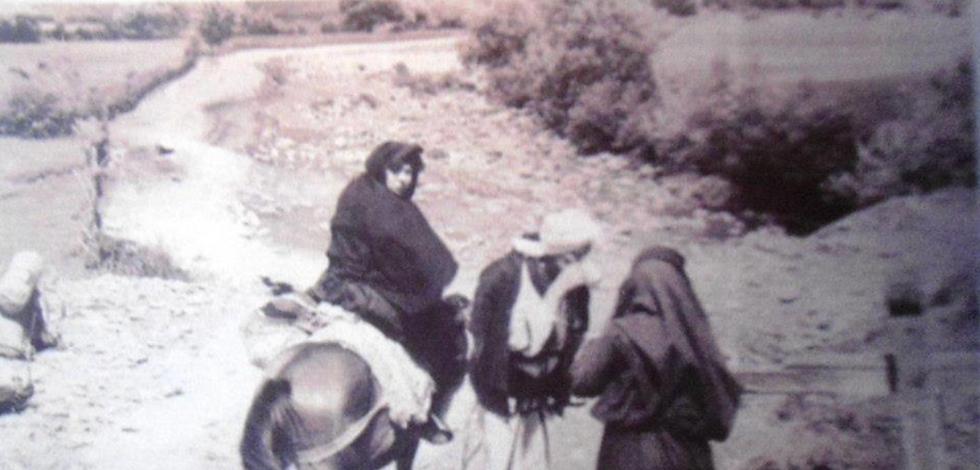
Mass executions in Plav and Guci would continue throughout March 1913 until the intervention of the Austro-Hungarian government in Montenegro following the vicious murder of Albanian Catholic priest Luigj Palaj near the city of Gjakova in Kosova, where an identical mission to forcibly convert Albanians to Orthodoxy was being implemented in the Plain of Dukagjini. Palaj and his 55-strong entourage would attempt to escape the Montenegrin forces after refusing to convert, but was caught and executed; the Montenegrins would cut Palaj’s pinky and ring fingers to gruesomely mimic the Sign of the Cross in Orthodoxy — a symbol later infamously used by the Serb ultranationalist četnik guerillas. The foreign uproar caused by this event would lead to a commission in Montenegro to investigate the crimes in Plav and Guci, resulting in the indictment of officials like Bashiqi and the replacement of Avram Čemović with Mašan Božović, though these only resulted in the short-term imprisonment of figures at the helm of the cruelty.
Božović would truthfully report to General Janko Vukotić that the Albanians of Plav and Guci only converted to Orthodoxy under threat of violence and execution. Under pressure by the Austro-Hungarians, Montenegro would implement a law proclaiming religious freedom on May 5. Families that were converted to Orthodoxy returned to their previously held faiths, save for some in Plav which remained Orthodox. Many other families which fled the conflict would return to the towns to find that their homes had been resettled by colonists placed there by the Montenegrin government. Others yet, anticipating what was to come, would flee to Albania, while 128 families found refuge in Turkey. Countless aspects of the massacres have been omitted from mainstream Montenegrin historiography, as has been the role of the Vasojevići in the elimination of innocent Albanian civilians — a profound irony considering their shared origin with the victims.
Similar killings of Albanians in Sanxhak would ensue in the years after those in Plav and Guci, particularly under the orders of Serbian nationalists such as Kosta Pećanac. These ethnic Serb detachments would take it upon themselves to cleanse the villages of the Peshter Plateau of Albanians, as took place in Ribariq in 1919. The forces would mercilessly kill a total of 28 members of the Rizvanaj family, including five women. Many Albanians in Sanxhak would also be exiled to Turkey, in nigh-identical fashion to the exile of Plav and Guci’s community as well as others in Kosova. These intense repressive measures would damage the Albanian communities of the region for decades, subjecting them to new dangers and changes, which would be cemented into a new age with the domestic loss of the National Front (Balli Kombëtar) at the conclusion of World War II. In all, contemporary sources and modern research estimate that some 1,800 Albanian civilians across Plav and Guci were murdered.

Second Era of Assimilation into Slavic Identity through Islam
Montenegrin rule was replaced in 1918 by the fledgling Kingdom of Serbs, Croats and Slovenes — a new nationalist project attempting to unite the various Slavs of the Balkan peninsula, the forerunner to the Kingdom of Yugoslavia and its Socialist successor. The following year, the Xhemijet party — a political group that was dedicated to defending the rights of Muslims in the new Kingdom — was founded in Shkup by the Albanian brothers Nexhip and Ferhat Draga from Mitrovica, Kosova. After the death of Nexhip in 1921, Ferhat would take control of the party and lead it to gaining 14 seats in the 1923 elections.
After clashing with the People’s Radical Party, led by the Serb politician Nikola Pašić, the government would attempt several times to hand him twenty-year imprisonments, failing each time; such practices were common with Albanian political leaders. In 1941, Draga welcomed the Italian invasion of the Albanian territories, which administratively united Plav and Guci, Sanxhak, western North Macedonia and Kosova with the Albanian state, which fascist forces had annexed into Italy two years prior. As Sabrina Ramet notes in her book, The Three Yugoslavias, the Albanians of this new Axis-aligned state were open to the Italians at first, as they facilitated the opening of long-suppressed Albanian-language schools and granted Albanian citizenship to the inhabitants of the annexed regions, thereby connecting them to state institutions which carried a sense of belonging that was novel to them.
In 1943, Italy capitulated its role in World War II, and the administration of its holdings was taken over by Nazi Germany. The German government would appoint Aqif Haxhiahmeti as the mayor of Pazari i Ri. Haxhiahmeti, a native of the city, was born with the surname Blyta, which he continued using as a sign of his Albanian heritage, but would take on his later surname in honor of his grandfather Ahmet, who completed the hajj pilgrimage to Mecca. The historian Izudin Šušević, in a 2001 work, notes a record of Blyta stating that all lands spanning from southern Serbia to southern Albania are rightfully Albanian, demonstrating his nationalist beliefs. To defend the Albanians and Muslims of the Peshter Plateau from četnik detachments, Blyta organized defenses in the region with the help of Albanian tribesmen under his command, such as Shaban Polluzha of Drenica. In 1943, Blyta would join the Second League of Prizren and align himself with Xhafer Deva of Mitrovica, aiding in the recruitment of volunteers for the 13th Waffen Mountain Division of the SS Handschar composed of Bosniak Muslims, as well as the Albanian tribesmen of Sanxhak, which committed atrocities against several civilian populations in the region. Blyta also enacted repressive measures against Albanians opposed to his rule.
It is important to note that Blyta’s collaboration with the Germans was distinct from that of the Balli Kombëtar — the main Albanian nationalist faction of World War II. The 13th Waffen Mountain Division of the SS Handschar, whose recruiting Blyta aided, would hand over the entire Jewish population of Pazari i Ri, numbering some 221 people, to the Germans in 1942. These crimes against the Jews were committed under German orders. The collaboration with the Balli Kombëtar, by contrast, was far more strictly limited to joining forces against Yugoslav and Albanian Communist forces, with such attacks on Jewish populations virtually nonexistent within the borders of the Albanian state.
At the same time, Blyta took on the defense of Albanian villagers against the threat of massacres by četnik and the new Yugoslav Partisan forces alike. After the capitulation of Germany in Europe, the Yugoslav partisans would launch offensives into Sanxhak, meeting Albanian forces at villages like Hazan near Berane, as well as near the city of Tutin. With the failure of the Yugoslavs and Albanian Communists to honor the Conference of Bujan in 1944 – an agreement which sought to maintain the unification of Kosova and Albania after the end of the War — as well as Tirana falling into the hands of Enver Hoxha’s Communists in November, the forces of Balli Kombëtar would be defeated. Hoxha would supply the partisans of Josip Broz Tito in their effort to retake Kosova, Montenegro, Sanxhak and Bosnia, leading to the execution of Blyta by the Yugoslavs in 1945 in a place known as Haxhet near Pazari i Ri. This came in the same sweep as the execution of some 1,500-2,000 civilians later thrown into the craters of previous bombings that functioned as makeshift mass graves. The victims were mainly young men and intellectuals from Pazari i Ri as well as the heads of local families, leading to the near-total destruction of morale among the Muslim Albanian population in Sanxhak.
The absorption of Albanian-inhabited lands by Yugoslavia would exacerbate the assimilation of Albanian civilians in Plav, Guci and Sanxhak, reintroducing barriers on the usage of the Albanian language, particularly in education. In a 2017 documentary about the assimilation, Professor Binak Ulaj from the village of Vuthaj would detail that after World War II, Albanian students like himself would be forced to complete their schooling in the main town of Guci in the Shtokavian (Serbo-Croatian) language; those who had learned in Albanian prior to the war would have to adapt quickly. Muslim teachers in the madrasas (Islamic schools) of the region came from Bosnia and Herzegovina, specifically the religiously influential capital of Sarajevo.
With the renewed suppression of the Albanian language, the post-war generation of the region became increasingly fluent in South Slavic tongues. This fact, paired with the majority Muslim composition and the impact of newly introduced ethnically Bosniak teachers, would lead to something new: a synthetic Bosniak identity amid the Albanian populace in Plav and Guci — one without any historical basis, seeing as none of the families, not even the genuinely Slavic ones of the region, migrated from Bosnia proper.
While some families would instead opt for a “Montenegrin Muslim” classification, many began to refer to themselves as Bošnjaci — Bosniaks. This new association of religion with ethnicity would emerge in the aftermath of the loss of their Albanian identity, forming an over-reliance on Islam as an identifiable self-quality and conflation with ethnicity, further fueled by the extensive linguistic use of South Slavic. As this magazine has previously covered, such a conflation between ethnicity and faith is broadly absent within Albanian society, which indicates the unique conjuncture Albanians of these Yugoslav-dominated regions found themselves in.
Though the Bosniak-oriented assimilation process was strong, Albanian villages in the outskirts of Plav and Guci such as Vuthaj which, in a rather predictable pattern, were more deeply embedded in the mountains, retained their Albanian identities due to their relative isolation. The cultural damage was deepened by the Yugoslav government’s decision to legally change family names, meticulously Slavicizing Albanian cognomen despite their distinctively non-Slavic origin and frequent possession of the Albanian suffix -aj. Examples include Koljenović from Kolina, Huseinović from Hysenaj, Šabanagić from Shabanagaj and Redžepagić from Rexhepagaj – an unfortunate loss of two great Albanian families’ original names, Ferović and Šabović from Ferri and Shabaj, Kojić from Koja, Gutić from Gutaj, Musić from Musaj, Sinanović from Sinanaj and Shala and Shkreli tribesmen from Sanxhak seeing their names altered to Šalja and Škrijelj, respectively.
This phenomenon was not restricted to Plav, Guci and Sanxhak, rather also unfolding in other parts of Albanian-inhabited Montenegro and the rest of Yugoslavia. Thus, the assimilation of the Albanians of the region, following centuries of the same pattern, had effectively become law, and would alter the ethnic make-up of the region, without regard to historical origins.
This dynamic gained new contemporary poignance with the recent announcement that the Queens, New York neighborhood of Astoria would see a newly named Ali Pasha Šabanagić Way. Located at the heart of a populous Bosniak diasporic community, the move definitively framed Ali Pashë Gucia as a Bosniak hero, as was celebrated in online posts. As could be expected, this historical revisionism did not go over well with Albanian audiences. Marko Kepi, a former New York State Senate candidate, did not mince words in a recent response: “This is Absolutely Disgusting, imagine stealing our national heroes and making them Bosnian in the middle of NYC!” It is not hard to imagine how such confusion, made possible by complex shifts over generations, can endanger even relations between communities which do not have extensive histories of direct conflict.
The Damning Evidence: Genetic Analysis of the Inhabitants
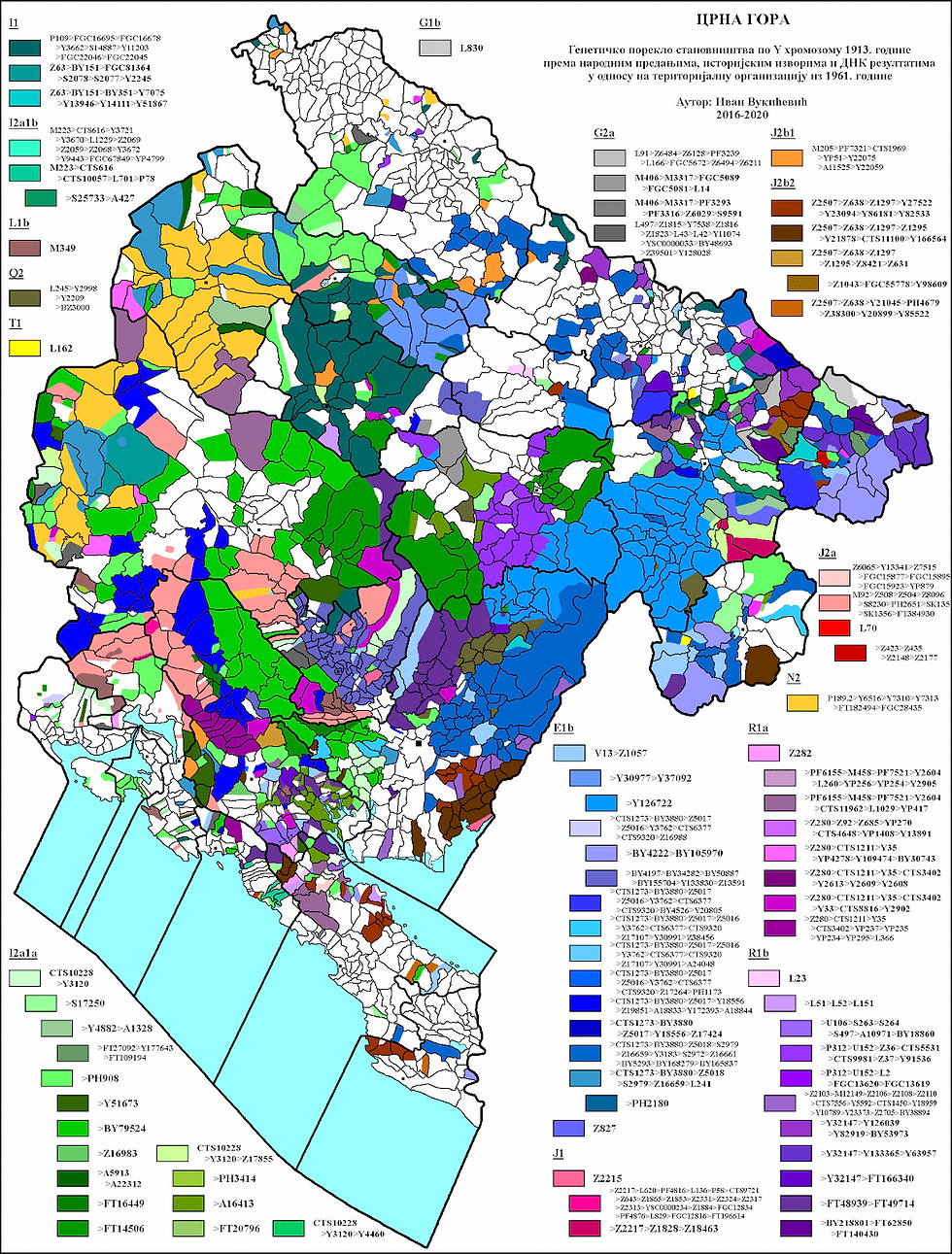
The Y chromosome is a sex chromosome in human DNA that is the determining factor for the male sex of an individual. Within the Y chromosome there exist single-nucleotide polymorphisms (SNPs), small mutations that accumulate over generations; shared SNPs are what define the various branches of the Y-chromosome tree, known in descending order as haplogroups and subclades, which are passed down father-to-son generation after generation.
Amongst Gheg Albanians, the most common Y-haplogroups are E-V13, J2b-L283, and R1b-M269. E-V13 is thought to be a Bronze Age lineage that first entered the Balkans through the migration of Anatolian farmers into the region some 5,000 years ago. J2b-L283 is another Bronze Age lineage that is thought to have developed in the Zagros or Caucasus Mountains and brought into the Balkans by Indo-European migrants of the western Yamnaya offshoot culture of the Cetina. Similarly, R1b-M269 is an Indo-European lineage that developed in the western Eurasian steppe, and came into the Balkans with the gradual Indo-European migration into Europe. The majority of Albanians carrying R1b-M269 specifically carry the R-CTS1450 identifier.
The north of Albania retained a patrilineal tribal system well into the 20th century that was inherited from Paleo-Balkanic ancestors. This organization, though losing all political relevance today, retains a significant role in Gheg Albanian culture and identity, with most tracing belonging to a tribe — known as fis in Albanian. The Slavs of Montenegro, as well as the Slavicized Albanians of this region, would adopt a similar system in the form of the pleme through contact with the Albanians of Malësia. These tribes passed the history of their lineage orally for centuries, being able to name generations of direct male ancestors, as well as identifying their relationships to other tribes and their brotherhoods. Not all tribes descend from the same male ancestor, as some were formed through the combination of several smaller tribes — known as polyphyletic ancestry — but genetic testing of Y-haplogroups in the 21st century has revealed that the oral traditions of tribes claiming descent from a single male are mostly correct.
The database created by the Rrënjët (Roots) project, for example, collects the Y-DNA results of Albanian males throughout the Albanian-speaking territories, alongside their last names and tribal affiliation. The collection reveals that, on average, members of the same fis share the same male progenitor, confirming their oral histories and identification. Examples include the Kastrati, who mainly belong to J2b-L283>FT134628, the Krasniqi mainly to J2b-L283>Y52453, the Kelmendi mainly to E-V13>CTS9320, the Shala mainly to R1b-M269>FT21873 and so on. The project has also revealed the haplogroup of the now-Slavicized Kuçi tribe, that being E-V13>BY165837. Considering that a large portion of Gheg Albanians — some 30-40% — belong to the haplogroup E-V13, the Albanian origin of the Kuçi tribe is solidified. This is highly relevant to Plav and Guci, seeing as a large portion of the tribal ancestry in the two towns is derived from the Kuçi tribe.
A Bosniak DNA project, known as Bošnjački DNK Projekat, has begun a similar mission tracking the Y-haplogroups of Bosniak men. The project has reinforced a fact established in many studies that the majority of Bosniaks carry R1a-M459>CTS3402 – an Indo-European lineage associated with the Slavs of Eastern Europe, brought into the Balkans by the Slavic migrations which began in the 6th century AD — as well as I2a-M438>S17250, another Slavic lineage associated with the Western Hunter-Gatherer populations of Europe prior to the Neolithic Farmer and Indo-European entries into the continent. Thus, while a small percentage of Bosniaks in Bosnia and Herzegovina have tested for Paleo-Balkanic lineages, the Slavic origin of the Bosniaks is next to certain, further confirmed by their high levels of Slavic autosomal admixture — that is, the proportion of their DNA inherited from Slavic ancestral populations is significant.
The Bosniak DNA project has also collected data on individuals from Plav and Guci, demonstrating their patrilineal origins through Y-DNA. The information gathered by the project reveals the presence of Albanian-heavy haplogroups and thus the assimilatory situation in the region:
Families in Guci like the Gačević, Kukić, Radončić, Dervišević, Čekić and Mrkulić belong to haplogroup E-V13 while the Šujak, Bektešević, Deljanin and Jarović carry R1b-M269>CTS1450, suggesting Albanian patrilineal descent.
Families in Plav like the Pjetrović (from the Christian Albanian name Pjetër), Ganić, Purišić, Hadžijić, Redžematović, Ahmemulić, Jadadić, Dešić and Šahmanović all carry haplogroup E-V13 while the Redžepagić, Jasavić, Musić, Mulić, Pejčinović, Kandić and Lalić all carry various clades of R1b-M269. The Huseinović, Bašuljević, Hadžović and Mujović carry the haplogroup J2b-L283. In Plav, the haplogroup results, again, suggest Albanian patrilineal descent in a majority of families.
Certain families are, indeed, of local Montenegrin Slav origin. Among these are the Šiljković family of Plav, who carry the haplogroup I2a-M438, as well as another Hadžović family of Plav who carry R1a-M459. Interestingly, the Koljenović family of Guci, who descend from the Kuçi tribe, carry I2a-M438, suggesting an early assimilatory event in which a Koljenović male ancestor integrated into an Albanian community, and became a part of the Kuçi. This phenomenon, though uncommon, is observable throughout the Gheg Albanian-speaking territories, and in spite of their Slavic haplogroup, the Koljenović remain fairly Albanian in autosomal admixture.
Similarly, the project has collected the haplogroups of male, Slavic-speaking individuals from the Sanxhak region and specifically Pazari i Ri, revealing similar results. Members of the Memić, Sinanović, Šušević, Đerlek and Bektašević belong to the haplogroup J2b-L283. Marovac, Sejdović, Biševac, Papić, Redžović, Ibrahimović, Nurović and Zukorlić belong to R1b-M269. Hodžić, Gusinac, Neimenovan, Gerba, Gorčević and Šušterac belong to various E-V13 subclades. These families, among many others in Sanxhak and the villages of the Peshter Plateau, carry Y-DNA lineages most associated with tribes of Albanian origin.
While Y-DNA haplogroups are not universally reliable in determining ethnicity – as in the case of the Koljenović family, which, despite being Slavicized Albanians, carries a common Slavic haplogroup – the well-attested historical record of assimilation as well as the oral family traditions in the regions of Plav-Guci and Sanxhak help lay out a stable foundation for genetic research to confirm that many of the families living in these territories come from Albanian origins, a picture remade by means less than peaceful.

Conclusion
What must be understood is that the assimilation of the Albanian population in Plav and Guci as well as in Sanxhak was not the result of an instantaneous shift in identity or the continuity of a Slavic cultural presence, but a phenomenon produced through mechanisms specifically aimed at redefining –– and, in some cases, neutralizing –– the Albanian factor. Such mechanisms, including conversion, legal reforms, elimination, language repression and (re-)education would gradually redefine how the Albanian community in these regions was labeled, and how they would come to understand themselves after centuries of repression and decades of massacres.
There are, of course, instances of those coming from Montenegrin descent integrating into Albanian society and even contributing to its history, such as the ambiguous case of the noted World War II Partisan Vojo Kushi, regarded as a martyr by Albanian anti-fascists for sacrificing himself in a firelight against an Italian tank unit in late 1942. There was not, however, an equivalent sustained pressure campaign employing such wide-ranging — and often violent — political and cultural mechanisms to absorb external populations into an Albanian identity.
Today, approximately 34.4% of the population in the municipality of Guci identifies as ethnically Albanian, compared to 57.1% identifying as ethnic Bosniaks. In the municipality of Plav, the difference is much starker, with only 9.43% of the population considering themselves Albanian, compared to 65.64% in the Bosniak column. However, with the advancement of historical scholarship, genetic testing and the crucial role played by diaspora organizations dedicated to the cultural preservation of the Albanians in the region, many have begun to reconnect with their heritage. The topic of Plav and Guci remains controversial, touching on sensitive religious and ethnic identity debates. Yet it is important to uncover the events that shaped the region through the centuries, and recognize that the status quo we find ourselves in must be first critically analyzed through a historical lens, and not taken as a fact of nature.

Valton Vuçitërna is a second-year student studying Finance at Michigan State University's Eli Broad College of Business. Valton was born and raised in Grand Rapids, Michigan to parents from Kosova. He is the founder of The Anadrini Project, a database designed to record the histories and genetics of families in Kosova's region of Anadrini, as well as the history of the town of Rahovec. He is interested in European history and the cultural heritage of the Albanian people.


Comments