
Tragic Beauty: How Southern Albanian Polyphonic Music Describes Emigration
Updated: May 12
Author: Enri Lala
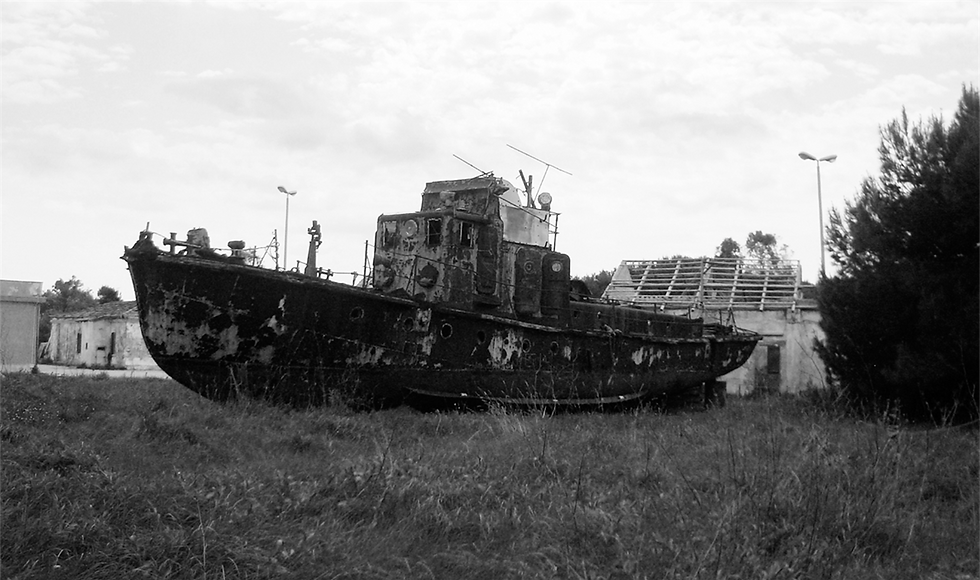
Lab song, Southern Albanian music, iso-polyphony. However we refer to it, the musical tradition of the Lab region in the Albanian South has long enjoyed a notoriety both for its antiquity and peerless value. Indeed, the pioneering work launched by Harvard scholars Millman Perry and his student Albert Lord has demonstrated that extant musical practices in the Balkans reveal a similar structure to Homeric verse. This is known as oral formulaic composition, by which bards across centuries could employ common structures to memorize and develop sweeping epics – without the need for a single author or a strictly defined text. In the Albanian context, however, this finds a more direct connection to the Kângë Kreshnikësh, most commonly translated as Songs of the Frontier Warriors, a rhapsodic canon marked by notable intercultural exchange and associated with the Gheg dialect of Northern Albania.
This article will present a brief history of this tradition before concluding with a commentary on how it has reflected the sorrows and dangers of post- communist emigration – including one of its most poignant texts on the matter, translated to English here for the first time.
The History of a Cultural Gem
The term iso-polyphony comes from Greek, where iso denotes a state of being equal or identical, referring in this case to the persistent drone which defines the tradition. Polyphony, on the other hand, describes the presence of several voices, not to be confused with the theory of the same name developed by the influential Russian literary critic Mikhail Bakhtin. The structure of the songs is relatively simple. It begins with an inceptive singer, called marrës, who takes up the iso. This is returned by a secondary singer, kthyes, who gives the sound back. The Lab region is the sole one to display polyphony of up to four parts, which includes at least a third singer, known as hedhës or “thrower,” who supports the first singer while filling in the texture of the song.
While the tradition has some presence in the Gheg-speaking North, the region’s gems mostly center around monodic rhapsodies, with polyphony being predominant in the South, where it is divided among the Toskëri, Myzeqe, Çamëri and Labëri regions. Each of these carries meaningful differences, with the latter producing the best-known and most zealously guarded variant. The name Labëri, it is worth noting, is believed to originate from the same root (*arb-/*alb) as Arbëri, which referred to all of Albania for much of the Middle Ages and whose English transliteration functions as the namesake of this Magazine. The transition from alb to lab is believed to be the result of a metathesis, or the rearranging of sounds in a word, common among Slavic speakers; this is further supported by the prevalence of Slavic toponyms among settlements in Labëria.
The historical record indicates that foreigners who came into contact with the tradition found it rather universally captivating. A rare such reflection can be found in Letters and Works by Lady Mary Wortley Montagu, the wife of the British ambassador to the Sublime Porte from 1716 to 1718, whose accounts of the Ottoman lands found a sizable posthumous audience in Western Europe. Lady Montagu describes a unit of Albanian guards with “the leader singing a sort of rude tune, not unpleasant, and the rest making up the chorus.” Then there is, of course, the most famed British traveller of the Albanian lands; Lord Byron offers this vivid description in his Childe Harold's Pilgrimage:
“The native revels of the troop began;
Each palikar [1] his sabre from him cast,
And bounding hand in hand, man linked to man,
Yelling their uncouth dirge, long danced the kirtled clan.”
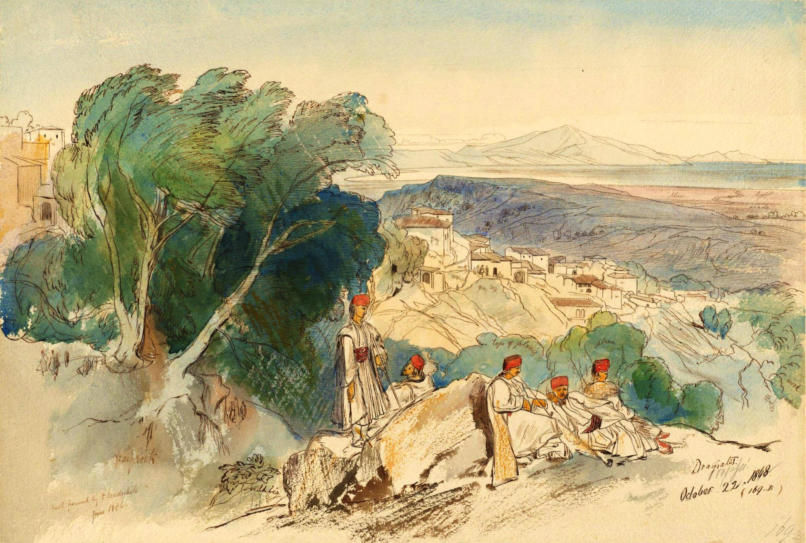
The question of the tradition’s origins, as with virtually everything in the Balkans, is a matter of contestation. UNESCO, which included Albanian iso-polyphony in its vaunted Intangible Cultural Heritage list by 2008, traces a connection between the practice and the ison drone notes found in Byzantine church music, a claim of some controversy for Albanian audiences. Vasil Tole, a prominent composer and former head of the Albanian Ministry of Culture’s Department of Cultural Heritage, instead presents the art form’s development as rooted in an indigenous, centuries-spanning tradition of lamentation for the dead.
The broad range of matters treated in its verses is more universally accepted. Tole strikingly describes iso-polyphony as “the autobiography of a nation,” capturing “profound things in life like lamentation, respect for the dead, love, emigration and heroes.” This is deeply reminiscent of Elijah Wald’s masterful description, in an entirely different context, that “the attraction of folk music was that it was steeped in reality, in history, in profound experiences, ancient myths, and enduring dreams … it was a way of understanding the world and rooting the present in the past.”
It is Tole’s penultimate theme which has seen particular emphasis in recent decades. Indeed, the art form has demonstrated a remarkable political flexibility in the last century of dramatically shifting regimes and societal circumstances. For centuries, the oral repertoire teemed with songs hailing heroes of all kinds. The communist regime that established itself in the aftermath of World War II made full use of this cultural gem in pursuit of its own ends.
Most prominent is the vast canon developed in praise of the dictator Enver Hoxha, a theme of particular importance to which I hope to dedicate a detailed standalone piece. Hoxha was a native of Gjirokastra, perhaps the city most closely connected with the iso-polyphonic tradition and home to the pre-eminent National Folklore Festival which it has hosted in the imposing 13th-century fortress every five years since 1968. Though the sinister propagandistic aims of the works are unmistakable, the artistic merit behind many of them remains beyond reproach.
The collapse of communism in the early 1990s profoundly impacted the art form in several ways. Part of the story is simple demand. Young Albanians were newly unshackled from severe repressions on foreign music, and embraced acts like Metallica and Scorpions with full force, leaving little room for the traditional fruits of their own soil. Just as importantly, the regime’s considerable investments in homegrown music rapidly faded amid escalating political chaos. Devastatingly, of the estimated 700,000 who fled Albania in the first post-communist decade there were many who would otherwise have helped sustain the musical tradition. As music producer Edit Pula recounts: “Our system broke along with all our industries.”
Yet emigration does not feature only in the musical tradition’s production mechanisms. It would increasingly take center stage as a theme of special significance.
Tragedy at Sea: The Dangers of Emigration in Song
Emigration was no small feat in the first years after the downfall of communism. Those in the South often hazarded treacherous land border crossings with Greece, while for thousands of others, primarily in the major cities, the most direct route lay through the Adriatic Sea to Italy. These journeys were often undertaken in old, overloaded cargo vessels or speedboats ill-equipped for the difficulties of the sea. The most memorable image at the beginning of the decade doubtlessly came from the Vlora, the cargo ship freshly returned from Cuba with a load of sugar in the summer of 1991. Despite its main motor being out of function, the ship’s captain was compelled to take some 20,000 desperate compatriots on a day-and-a-half-long trip, initially headed to Brindisi before being forced to take a final detour to the port of Bari.
Instances of drownings and wrecks appeared throughout the decade, but the phenomenon took on national meaning on March 28, 1997. On that Friday, the motorboat Katër i Radës, originally meant to crew up to eight, left Vlora carrying about 120 refugees. The journey came during a true annus horribilis, at the height of the civil unrest that engulfed the country and neared civil war status, driven by recently crumbled pyramid schemes and deep political instability. Just three days prior, Italy and Albania had signed a bilateral agreement, with the stronger partner offering much-needed institutional and financial assistance in exchange for the latter’s cooperation in returning prospective migrants. Additionally, the Italian military launched Operation White Flags, which imposed a de facto blockade for those seeking to move westward through the crucial Strait of Otranto.
It is in this context that, by the time Katër i Radës approached Sazan, Albania’s only major island, it was confronted by the Italian Navy corvette Zefiro. After this initial contact failed to compel the boat to reverse course, the Italian Navy’s Sibilla, a small corvette-styled warship, joined the scene. The Sibilla gave chase and soon after struck the much smaller Katër i Radës, leading it to capsize.
Most on the ship died in the cold of the Adriatic. The figures of those lost are estimated at between 86 and 108. One family’s story reveals the extent of the human horror: one of the survivors, a man named Krenar, would never again see his wife, six-month-old daughter, brother, sister-in-law or six nephews. As always, the calamity is fully revealed in its details, as the ship was in fact sunk in Albanian territorial waters, between 10 and 15 miles from the coast of origin, and some 35 miles from Italian shores.
Parts of Katër i Radës were moved to create a monument in the port of Otranto – with some of the ship also returned to serve as commemoration in Vlora after years of demands by the victims’ families – and the tragedy went on to play a role in domestic Italian politics. Yet only the Italian and Albanian captains of the respective ships faced consequences, receiving light sentences for “shipwreck and multiple manslaughter,” with limited reflection or reform imposed on the broader chain of command which made the loss of life possible. To this day, 24 bodies remain undiscovered and unburied, subsumed in the dark fate of the Adriatic.
The episode is particularly important in challenging how this period in the relations between the two countries is remembered. In the summer of 2025, Albanian Prime Minister Edi Rama criticized the British government’s plan to house failed asylum applicants in third country centers. He described it as the symptom of a society which found itself “in a very dark place” post-Brexit. Upon the obvious being pointed out, that Rama’s government had agreed to a very similar, albeit stalled, anti-migration scheme in 2023 with his Italian counterpart Giorgia Meloni, he gave a telling answer: “Practically we are one country made of two independent countries … Italy has been there for us in every dark moment and difficult situation … [We] have a weak spot for Italy, so when Italy asks us for something we say yes, full stop.”
It hardly needs to be noted how disconcerting it is to hear the Prime Minister of a state which has long been the subject of imperial designs by its neighbors speak of it as belonging to another. This is made all the more sensitive once we consider that the invasion of Albania by Fascist Italy took place less than nine decades ago – and this just 19 years after the Vlora War, when local militias fought to expel an Italian presence in Southern Albania, with its events the subject of several musical gems in the iso-polyphonic tradition. These concerns are hardly abated by statements like that of the former Italian ambassador in Tirana, Fabrizio Bucci, who stated: “Albania is for me the 21st region of Italy.” Even under the veil of a close and committed friendship, such statements retain a ring of dominance and historical manipulation. The legally dubious 1997 blockade and its enforcement speak to the strict protection of Italian interests rather than an unflagging humanitarian commitment. The victims of the tragedy it produced, and the families which suffer to this day, present a compelling challenge to the politically convenient narrative that has been constructed in the years since.
As with most major themes of Albanian life, the tragedies of emigration have found themselves reflected in the iso-polyphonic tradition. The traditional group from the town of Delvina composed a touching tribute to the victims of the 1997 tragedy in particular, with its lines running:
“O, the sea with your azure water,
What sin had the child committed?
Since you took its life,
How to even believe in an Almighty?”
The following stanza also powerfully contextualizes the exodus in the violence which left many young people no choice but to look for other shores:
“And you, o mothers of Vlora,
For whom do you weep more?
Those swallowed by the sea,
Or those taken by the bullet?”
Yet I have chosen to center this article around the song found below for a few reasons. Even for listeners who do not understand the Albanian original, I suspect that the tune will stand out as possessing a particularly haunting quality. The leading female voice in the marrës position, with her unsettling quiver, is somewhat of a departure from the predominantly male singing tradition. Her penetrating voice clashes spectacularly against the deeper male tones patiently sustaining the iso in the background, allowing her to weave a tale I have found impossible to forget since a first listen on a summer afternoon on a drive overlooking Lukovë village, with the vast Ionian in the distance only adding to the overwhelming image. The looming context of a mother’s suffering, untethered to a specific event, heightens both its dramatic weight and relevance to an experience shared by far too many parents.
The aim of these paragraphs has been to provide a succinct enough background on the iso-polyphonic tradition, and the layers of meaning behind recent productions on the tragedies of emigration. Now there is little left to do but let the verses speak for themselves.
O, You Sons who Tore Through the Sea
O, you sons who tore through the sea
Scattered like birds from the nest.
What befell that son of mine?
Did your eyes catch a glimpse of him?
Did your eyes not catch a glimpse of him?
I beg you, o sons of mine.
For many years now I wait and suffer,
Tears in my eyes, my heart has dried up.
For he left me in the dead of night,
Took his steps as if wave after wave.
He vowed that he would be back,
As long as he does not return I know that he lives not.
May you sons of mine enjoy your youth.
If the moon lays eyes on him
Tell him one night to return,
Tell him that his mother lives no longer.
[1] Palikari is a common Greek term denoting a young, brave man. It was commonly used to refer to Greek as well as Albanian soldiers who fought for the Ottoman Sultan and, prominently, for the Greek cause during the War of Independence (1821-1829). The context of the poem makes it clear that, much like in the case of Lady Montagu, Lord Byron was writing of Albanian guards.
Enri Lala is the founder and Chief Editor of Arbanon Magazine. A fourth-year student at the University of California, Santa Barbara, he is pursuing majors in History and Global Studies alongside a minor in French. He is interested in Albanian and European history, American foreign policy and various literary traditions.


Comments